Why Your Table Tennis Serve Works in Practice and Falls Apart in a Match
Quick Answer: Practice serving is a closed skill performed with no consequence, no opponent, and unlimited resets, while a match serve is performed once, under observation, with a specific tactical intent. The gap comes from three things: a rushed toss, a shortened follow-through under pressure, and never having practised the serve inside a point. Serving with a return, with a score, and with a target fixes most of it.
Alone at the table you can put twenty in a row into the corner with heavy backspin.
At 8-8 you serve long and they attack it, and you have no idea why.
The serve did not change. The conditions it was learned in never matched the conditions it gets used in.
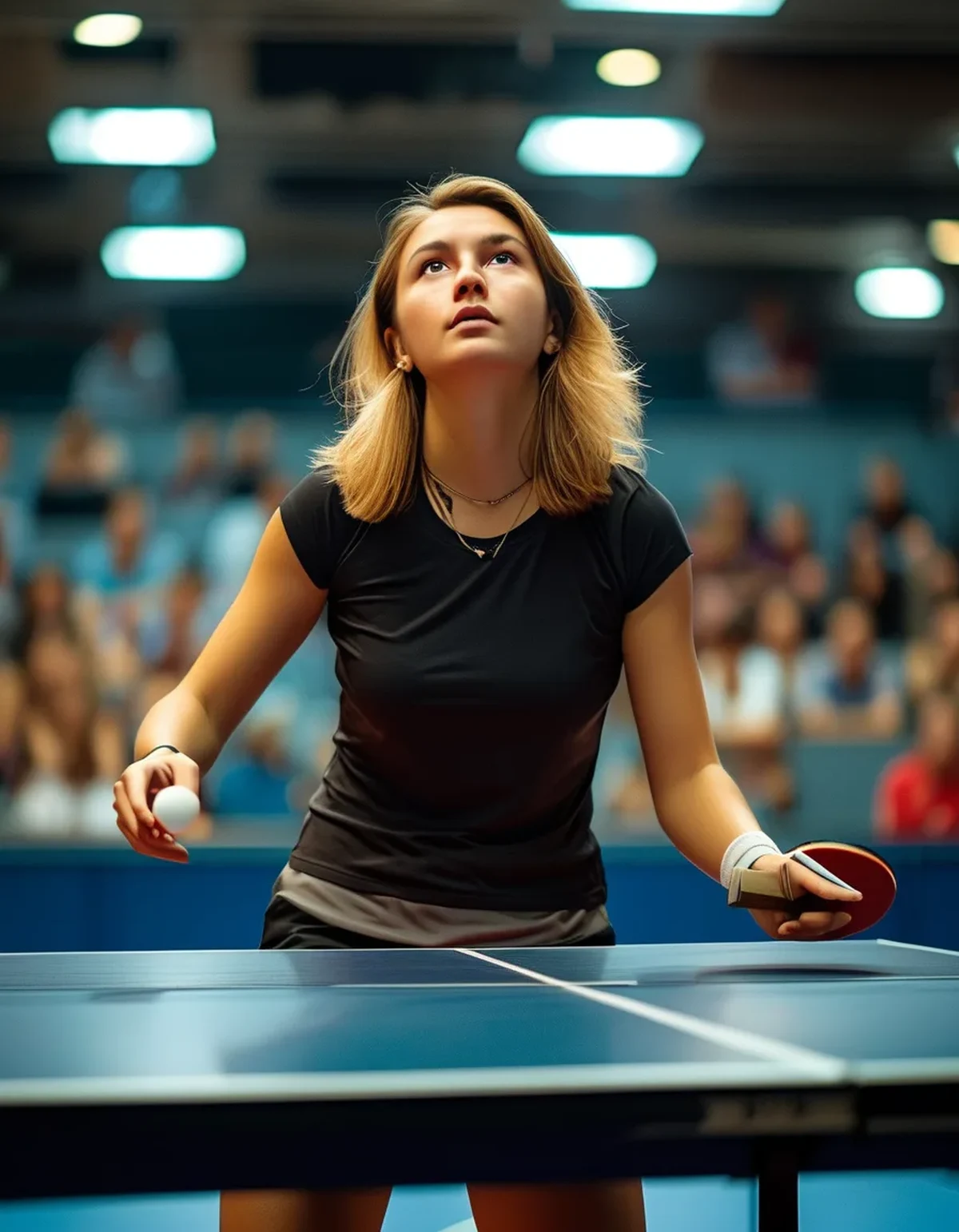
What actually changes between the basket and the match?
Four things, and only one of them is psychological.
The toss gets rushed. Under pressure, movements speed up — this is one of the more consistent effects of arousal on motor skill. A serve toss that was 20cm in practice becomes 10cm in a match, and a lower toss means less time to generate racket speed, which means less spin.
The follow-through shortens. Anxiety produces a subtle protective shortening of movement, and on a serve that shows up as decelerating through contact rather than accelerating. Less racket speed, less spin, and a ball that sits up.
Your intention changes. In practice you are trying to execute a serve; in a match you are trying to win a point. Those produce different movements — the second one adds a subconscious concern about what comes back, which pulls you upright and out of the serve early.
And the target moves. Practising into an empty half means your placement was never contested. In a match, the opponent’s position determines whether the same serve is good or terrible, and you have no habit of checking.
Note that the legal toss requirement is 16cm — roughly the height of the net — which is worth knowing because a rushed match toss frequently drops below it, and at any level with umpiring that is a fault as well as a bad serve.
How do you practise so it transfers?
By adding back the parts that a solo session removes, one at a time.
Practise with a target, always. Put something physical on the table — a box lid, a sheet of paper, a spare ball — and serve at it. Undirected serving practises the stroke and not the skill, and placement is what makes a serve effective at club level far more than spin does.
Practise with a return. The single highest-value change is having a partner return every serve, even loosely. This restores the follow-through problem, because you now have to recover and play the third ball — which is the real skill.
Practise the serve-and-third-ball as one unit. The serve exists to set up the next shot, and separating them in practice is why so many players have a good serve and no idea what to do after it. Serve backspin short, expect a push, attack the push — drill the sequence rather than the serve.
Add a score. Playing serve-only games to 11, where you get a point for hitting the target and lose one for missing, introduces consequence. Consequence is the ingredient practice usually lacks, and it is easy to add.
Then vary deliberately. Practising one serve fifty times builds a groove you cannot access under variation. Alternate: short backspin, long topspin, short sidespin — never twice in a row, which is far closer to how you will actually use them.
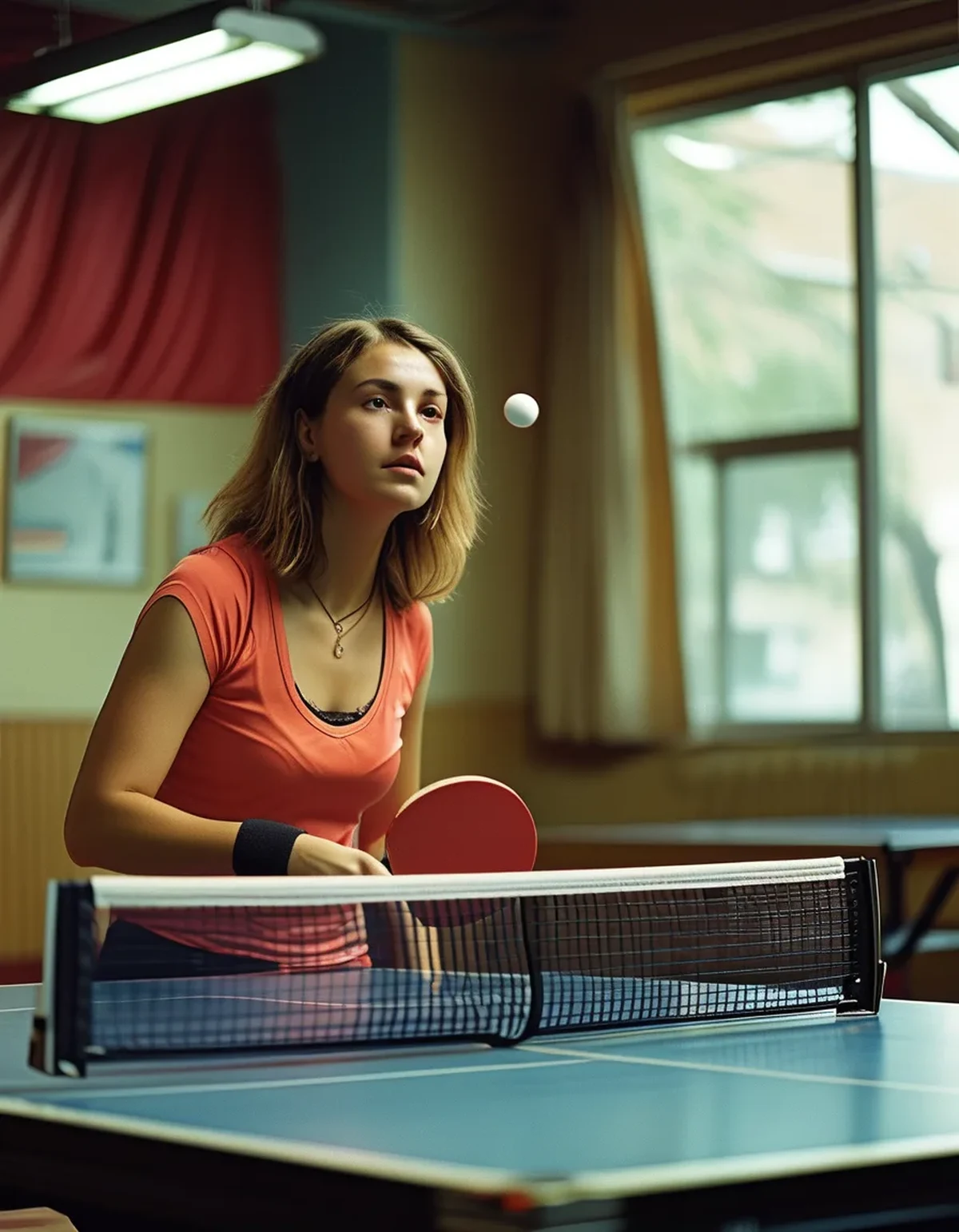
What should you do in the match itself?
Simplify, slow down, and have a plan for the serve before you pick up the ball.
Have a routine and use it every time. Two bounces of the ball, one breath, look at the target, serve. A consistent pre-serve routine is one of the better-supported interventions for performance under pressure, and it takes four seconds.
Deliberately toss higher than feels necessary. Since pressure shortens the toss, aiming high overcorrects back to normal. It feels exaggerated and it produces the serve you practised.
Decide the serve before you step to the table, not while standing there. Deciding late is what produces the half-committed serve that goes long.
Simplify at 8-8. Your third-best serve executed with full commitment beats your best serve executed tentatively. On the big points, use the serve you can land under any circumstances, and win the point with the third ball instead.
5 mistakes players make with their serve in matches
- Serving the same one all game because it worked twice at the start. Good opponents adjust by the third time.
- Watching your serve instead of recovering. The serve is finished the moment it leaves your bat — the point is not. Get back into position before the ball crosses the net.
- Serving long on big points. The most common pressure error, caused by the shortened toss and rushed contact.
- Ignoring where the opponent is standing. A serve to their strength is a wasted serve regardless of quality.
- Never serving to the middle. The elbow — the crossover point between forehand and backhand — is the hardest place to return from, and almost nobody at club level uses it, which makes the fifth one the cheapest free point available.
FAQ: Table Tennis Serve Questions, Answered
How many serves should I actually have?
Three that you trust, from one motion, is better than eight you can approximately do. The valuable property is disguise — several different serves that look identical until contact — and that comes from depth of practice, not variety. A short backspin, a long fast serve, and a short sidespin from the same action covers most club situations.
Why does my serve go long specifically when I try to keep it short?
Usually the first bounce is too far from your end. A short serve needs its first bounce close to your own end line — within about 20cm — so that the second bounce lands before the opponent’s end. Aiming to bounce it near the net is the classic error, and it produces a serve that carries every time. Move the first bounce back and the length fixes itself.
Does serve practice on my own have any value?
Plenty, for the mechanics. Solo practice is the right place to build contact quality, spin, and a consistent toss — you can do 200 repetitions in the time a partner drill gives you 40. What it cannot build is the decision-making and recovery, which is why a session should include both. A reasonable split is 15 minutes solo, then serve-and-third-ball with a partner.
How much does the rubber affect this?
More than most players account for, particularly as it ages. Grippy rubber generates spin; rubber that has lost its tack generates noticeably less, and the loss is gradual enough that you adjust without noticing. If your serves have quietly become less effective over a few months and nothing else changed, check the rubber — a fingertip test tells you a lot, and replacement typically restores the serve you thought you had lost.
TL;DR:
- Pressure speeds up the toss and shortens the follow-through, which costs racket speed and spin.
- Solo practice removes the opponent, the consequence, and the third ball — the three things a match adds back.
- Always serve at a physical target; undirected practice trains the stroke and not the skill.
- Drill serve-and-third-ball as one unit, since the serve exists to set up the next shot.
- Use a four-second pre-serve routine and deliberately toss higher than feels necessary.
- On big points, use your most reliable serve at full commitment rather than your best one tentatively.
Add a target and a scoreline to your next serving session, and the gap between the practice serve and the match serve starts closing immediately.
Keep Reading
This article is for general informational and styling purposes only. Fit, sizing, and product availability may vary.