Why Your Table Tennis Serve Keeps Sailing Long Off the Table
Quick Answer: A serve that repeatedly goes long is usually caused by either too flat a paddle angle at contact or too much forward paddle speed relative to the amount of spin generated — both send the ball traveling farther than intended after it bounces on your side.
If you’ve been chalking this up to bad luck, it’s worth checking these two mechanical factors specifically.

Why does paddle angle matter so much for serve depth?
A paddle face that’s too closed (facing more forward than downward) at the moment of contact sends the ball on a flatter trajectory with less downward spin to pull it back down, which naturally carries it farther. Opening the paddle face slightly more — angling it a bit more toward the table — adds topspin or backspin that helps control depth.
How does spin actually control how far the ball travels?
Backspin, in particular, acts like a brake after the bounce, causing the ball to check up and travel a shorter distance than a flat or topspin-heavy shot would. A serve with more backspin relative to forward speed will naturally land shorter, which is part of why backspin serves are a staple for keeping serves controlled and difficult to attack.
Is contact point on the ball part of the problem too?
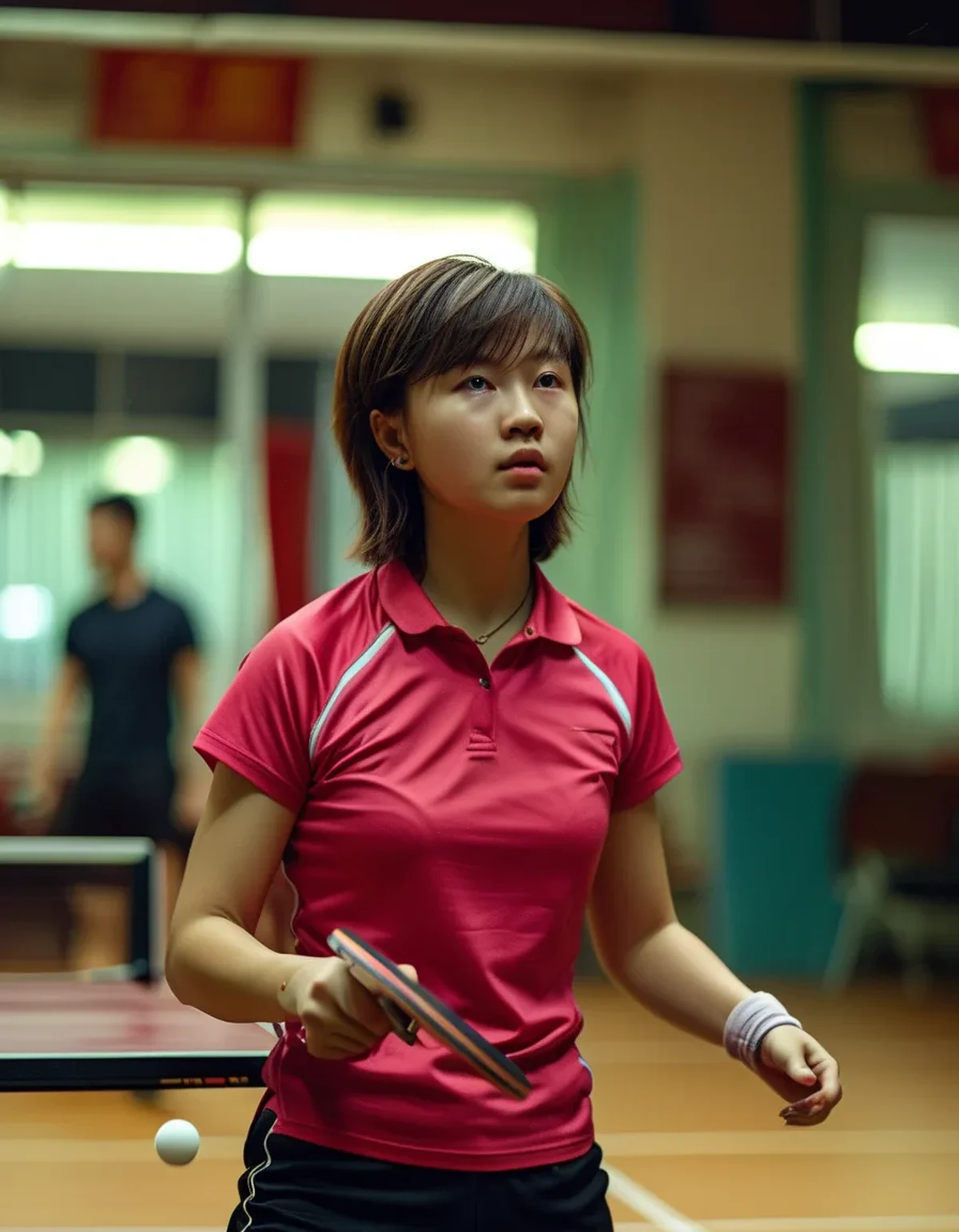
Yes — making contact too low on the ball, near its bottom, with a flat paddle tends to produce a flatter, longer trajectory, while brushing more across the middle-to-back of the ball generates the spin that helps control depth. Small adjustments in exactly where the paddle meets the ball can change serve depth significantly.
Myth vs Fact: Table Tennis Serve Depth
Myth: A longer serve means more power and is always better. Fact: Depth control matters more than raw power for serve effectiveness — an overly long serve is often easier for opponents to attack.
Myth: Serve depth is mostly about arm strength. Fact: It’s largely about paddle angle and spin, not how hard you swing.
Myth: Every player’s ideal serve length is the same. Fact: Effective serve length varies by playing style and opponent — the goal is control and intention, not a single universal target.
FAQ: Table Tennis Serve Questions, Answered
How short should a good short serve actually be?
A well-executed short serve typically bounces twice on the opponent’s side if left untouched, landing close enough to the net that it’s hard to attack aggressively.
Does ball speed alone cause serves to go long?
Speed contributes, but spin and paddle angle usually matter more — a slower serve with a flat paddle angle can still sail long.
How much practice does it take to fix a consistently long serve?
With focused practice on paddle angle and contact point, many players see noticeable improvement within a few sessions of 15-20 minutes of dedicated serve practice.
TL;DR:
- Long serves usually come from too flat a paddle angle or too little spin relative to speed
- More backspin acts like a brake, helping control how far the ball travels after the bounce
- Contact point on the ball affects trajectory as much as paddle angle does
- Depth control matters more for serve effectiveness than raw serve power
Next practice session, try deliberately opening your paddle angle a few degrees more and brushing higher on the ball — that combination alone often fixes chronically long serves.
Keep Reading
This article is for general informational and styling purposes only. Fit, sizing, and product availability may vary.