Why Your Return Goes Long Against a Heavy Topspin Serve Specifically
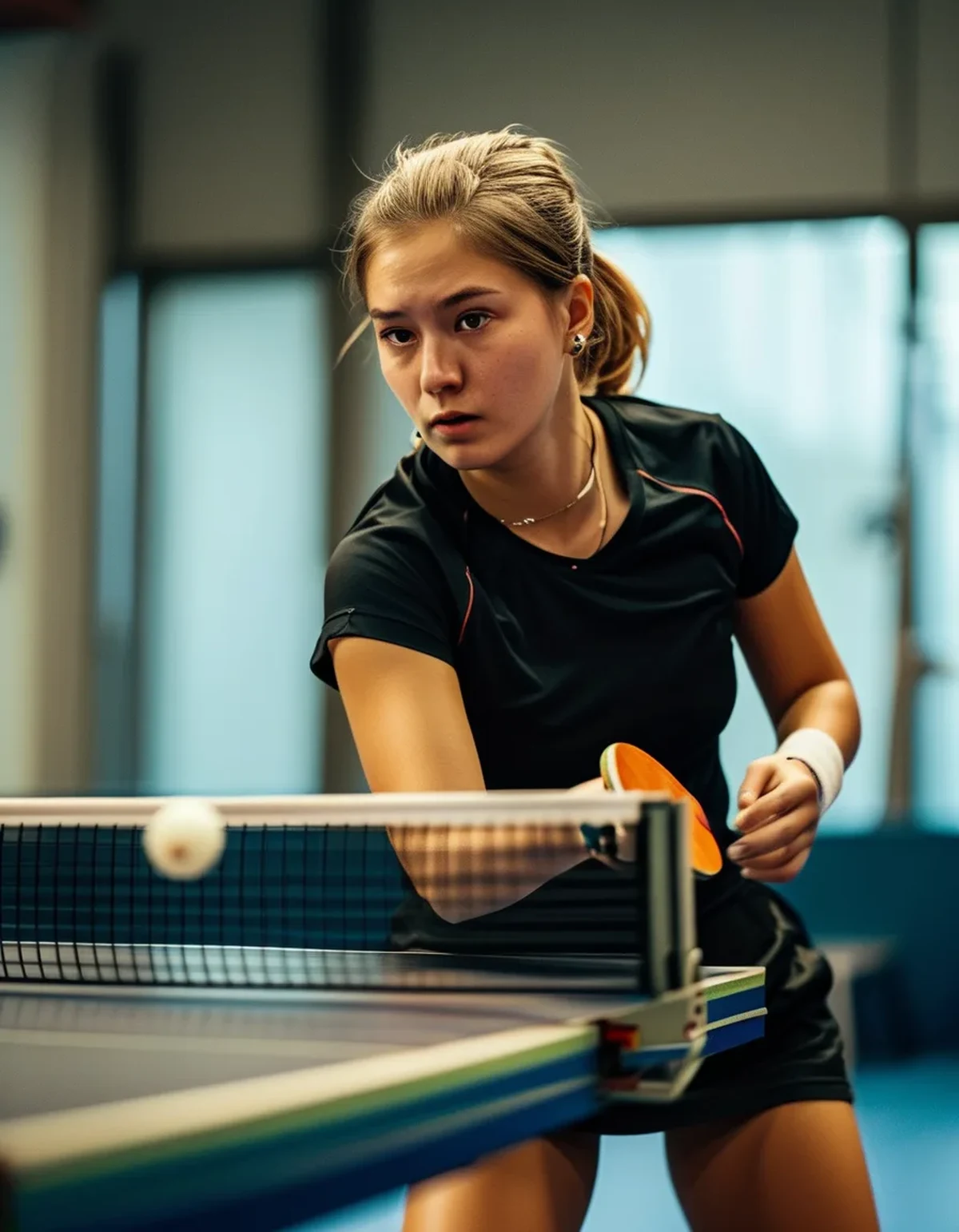
Quick Answer: A return that consistently sails long against heavy topspin, but not against other serve types, usually means the paddle face is angled too open (facing too far upward) at contact — a compensation that works fine against flat or backspin serves but adds unwanted extra lift to a ball that already has significant forward rotation and momentum, sending it past the table.
Same return technique, different result depending on serve type — and that inconsistency, specific to heavy topspin, points to one identifiable paddle angle issue.
Why does topspin specifically punish an overly open paddle angle more than other serve types do?
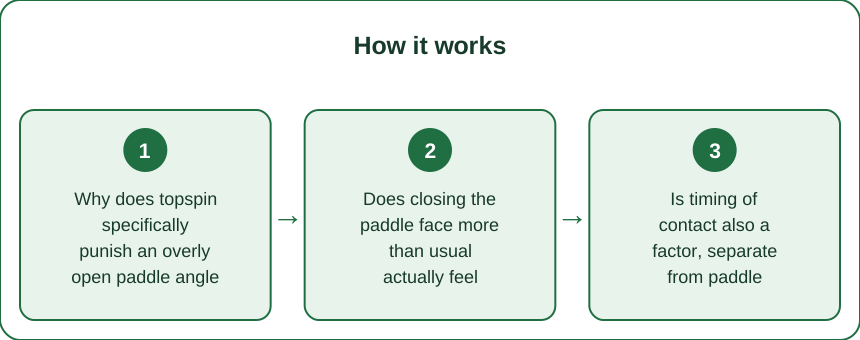
A topspin ball already carries significant forward-rotating momentum that naturally wants to carry the ball forward and up off contact, and an overly open paddle face adds even more upward lift on top of that existing spin-driven trajectory, compounding into a return that travels considerably further than the same paddle angle would send a flat or backspin ball, which don’t carry that same forward-driving spin to begin with.
Does closing the paddle face more than usual actually feel intuitive when returning topspin?
Not always intuitively, no — many players’ instinct is to open the paddle face further to “lift” the ball back over the net, when the ball’s own topspin is already providing that lift, meaning the technically correct adjustment (a slightly more closed, downward-angled paddle face) can feel counterintuitive until it becomes a trained habit.
Is timing of contact also a factor, separate from paddle angle, for this specific problem?
Yes — contacting the ball earlier, closer to the top of its bounce rather than after it’s already dropped further, gives a player more control over redirecting the ball’s existing topspin momentum, while late contact against heavy topspin often forces a more open paddle angle just to get the ball over the net at all, compounding the long-return problem.

Does grip and wrist position change how much paddle angle correction actually gets applied?
Yes — a loose, reactive wrist can unconsciously open the paddle face further under the pressure of a fast incoming topspin serve, meaning a firmer, more deliberate wrist position that resists that unconscious opening tends to produce a more consistently corrected, closed paddle angle against heavy topspin specifically.
Does this same paddle angle correction apply to topspin loops during a rally, not just the return of serve?
Yes, the same underlying principle applies to any heavy topspin ball encountered mid-rally, not just the initial serve return, meaning the paddle angle adjustment is a transferable skill rather than one limited only to the return-of-serve situation specifically.
FAQ: Returning Heavy Topspin Serves, Answered
Is a block or a topspin counter generally the more reliable return against heavy topspin serves?
A controlled block with a slightly closed paddle angle is generally considered the more consistent, lower-risk option against heavy topspin for players still developing consistency, compared to attempting a full topspin counter-loop.
Does paddle rubber type affect how much angle correction is needed against topspin?
Yes — a more grippy, high-friction rubber grabs and redirects incoming topspin somewhat differently than a harder, less grippy rubber, meaning the exact degree of angle correction needed can vary by equipment, though the closed-angle principle itself still applies broadly.
Is it worth practicing against a topspin-serving partner specifically to fix this pattern?
Yes — dedicated practice against consistent heavy topspin serves, rather than only encountering them occasionally in mixed practice, helps build the specific paddle angle correction into reliable muscle memory faster than sporadic exposure during general play.
TL;DR:
- A return that sails long specifically against topspin points to an overly open paddle face adding unwanted extra lift
- Topspin’s own forward momentum already provides lift, meaning less paddle opening is needed than instinct suggests
- Earlier contact, closer to the top of the bounce, gives more control over redirecting the ball’s existing spin
- A firmer wrist resists the unconscious paddle-opening reflex that heavy topspin tends to trigger under pressure
Next time a topspin serve sails your return long, close the paddle face slightly more than feels natural — that single adjustment resolves most topspin-specific long returns.
Keep Reading
This article is for general informational and styling purposes only. Fit, sizing, and product availability may vary.