Table Tennis Technique: The Four Strokes and the Footwork That Powers Them
Table tennis rewards technique faster than any racket sport — the ball is light, the table is small and the improvement loop is minutes long — and the whole beginner curriculum is one grip, one stance and four strokes. The technique guide.
The Foundation
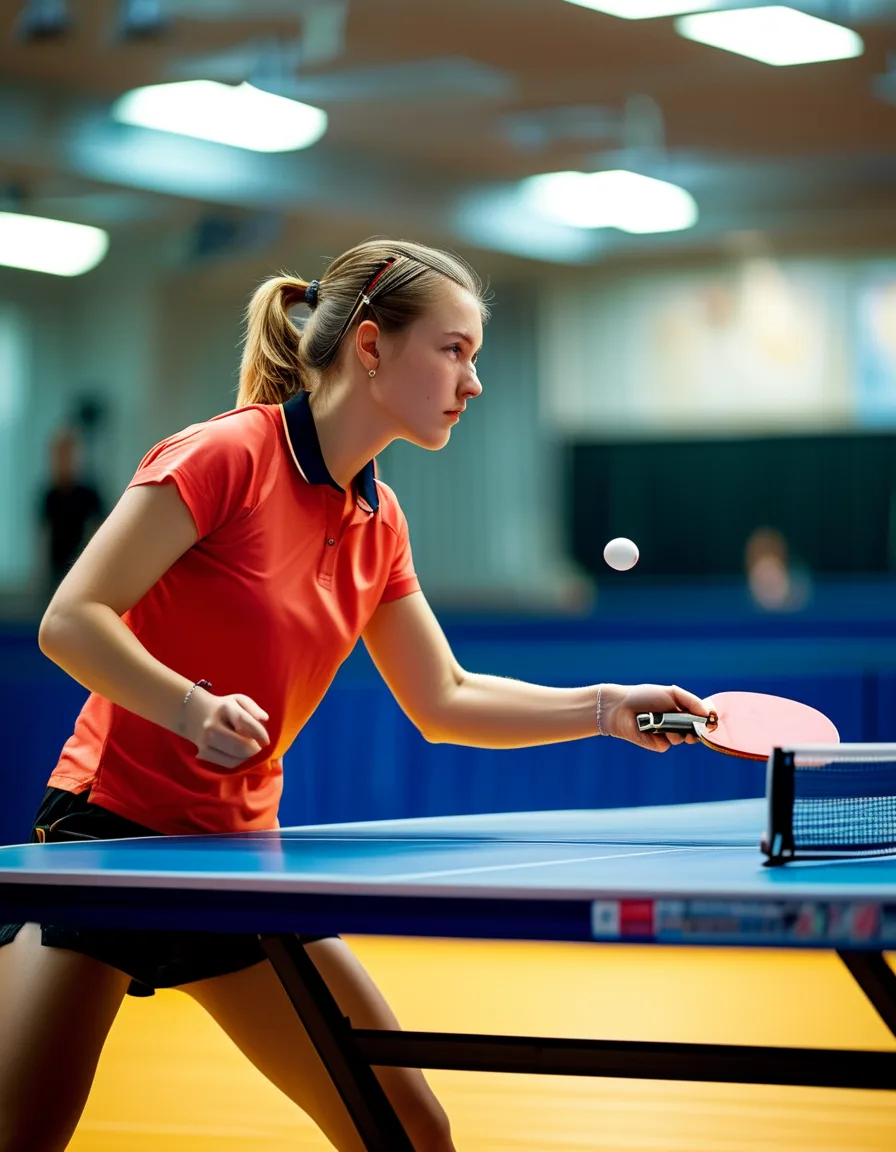
Grip and stance: the shakehand grip (the western standard — the handshake hold with the relaxed pressure; the death grip killing touch per the grip doctrine; the penhold acknowledged as the other tradition), the ready stance (the feet wider than shoulders, knees bent, weight forward on the balls — the crouch that looks excessive and isn’t; the racket at table height, centered), the table position (the forehand-corner bias from the ready position — the elbow away from the body; the arm’s-length-plus distance from the table edge), the split-step habit (the tiny hop as the opponent strikes — the reaction-priming bounce from the agility doctrine), and the relaxation law (the loose arm generating speed that tension can’t — the whip-versus-club principle; the technique doctrine’s universal truth at its most visible).
The Four Strokes
The curriculum: the forehand drive (the stroke learned first — the small backswing, the brush-forward contact at the ball’s peak, the follow-through toward the target; the waist rotation powering, the arm steering per the rotation doctrine), the backhand drive (the elbow-led compact push-flick — the stroke played in front of the body; the beginner’s usual favorite for its simplicity), the backhand push (the touch stroke — the open racket sliding under the ball; the control shot that keeps rallies and returns backspin serves), the forehand push (the same touch on the forehand wing — the four-stroke matrix completed: two drives, two pushes; the entire beginner game built from these), the stroke-learning method (the one-stroke-per-session focus from the skill doctrine — the fifty-rep blocks against a consistent feed; the multiball-or-robot efficiency; the shadow reps between sessions per the home doctrine), and the quality standard (the same-spot consistency before speed — the twenty-in-a-row benchmark per stroke; the placement game from the drill doctrine).
The Footwork
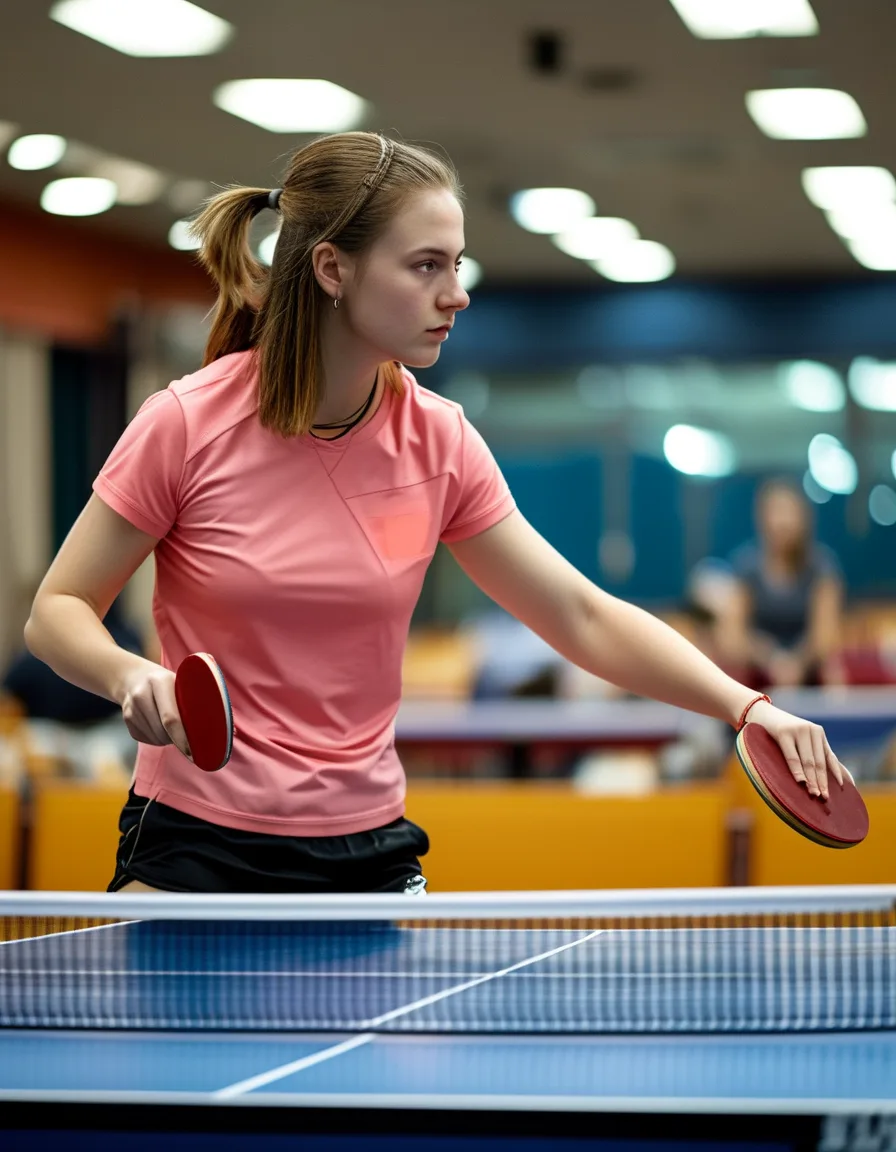
The legs behind the hands: the side-step pattern (the shuffle that moves you without crossing feet — the small-steps doctrine; the ball played from position, never from reach), the in-and-out movement (the short-ball step-in with the right foot under the table — the recovery push-back; the depth game’s footwork), the stroke-footwork marriage (the rule that footwork ARRIVES before the stroke starts — the reaching arm being the positioning failure’s symptom per the movement doctrine), the drill menu (the two-point forehand drill — the side-step between wide and middle balls; the Falkenberg pattern for the ambitious; the shadow-footwork sets from the solo doctrine), and the fitness note (the crouch-and-shuffle taxing legs honestly — the calf-and-quad stamina from the conditioning doctrine; the table tennis being the cardio that doesn’t feel like cardio per the benefits doctrine).
The Spin Introduction
The game’s third dimension: the spin reality (the brush contact creating rotation that curves flight and kicks bounces — the beginner’s mystery losses explained; the spin literacy being table tennis’s actual skill divide), the reading skills (the opponent’s racket angle at contact watched — the fast-arm-low-to-high meaning topspin, the slicing-under meaning backspin; the ball’s flight and bounce as the confirmation), the response rules (the topspin met with a closed racket, the backspin lifted with an open one — the two-rule start that handles most rally balls), the first spin serves (the backspin serve from the serve doctrine — the brush-under contact; the practice bucket from the home doctrine), the loop preview (the topspin attack stroke as the intermediate horizon — the brush-heavy drive that defines the modern game; the curriculum’s next chapter named, not rushed), and the learning close (the technique compounding fast at this table — the weekly club night plus home reps producing visible monthly gains per the progression doctrine; the four strokes, the shuffle and two spin rules being a whole game’s foundation; the rally, increasingly, going where you send it). One grip, four strokes, feet before hands: the technique, table-ready.
The whole beginner game is one relaxed shakehand grip, a low ready stance, and four strokes — two drives, two pushes — learned fifty reps at a time. Feet arrive before the stroke starts, and two spin rules (close the racket to topspin, open it to backspin) unlock the mystery.
Keep Reading
This article is for general informational and styling purposes only. Fit, sizing, and product availability may vary.