Why Table Tennis Reaction Time Doesn't Transfer to Other Sports the Way You'd Expect
Quick Answer: Table tennis genuinely builds elite reaction speed — but reaction training is largely context-specific, so it doesn’t broadly transfer to driving or unrelated sports. Some real overlap exists with tennis and badminton, which share visual-tracking demands. That’s still a strong reason to play; it just isn’t the “sharpens all your reflexes” claim.
You’ve been playing twice a week for a year. Your hands at the table are genuinely different — you’re returning shots that would have been past you in September.
Then someone knocks a glass off the counter and it hits the floor before your arm has finished forming an opinion.
Table tennis gets credited with building lightning reflexes, and it absolutely does. That speed is just more narrowly specific to the sport than the popular claim suggests.
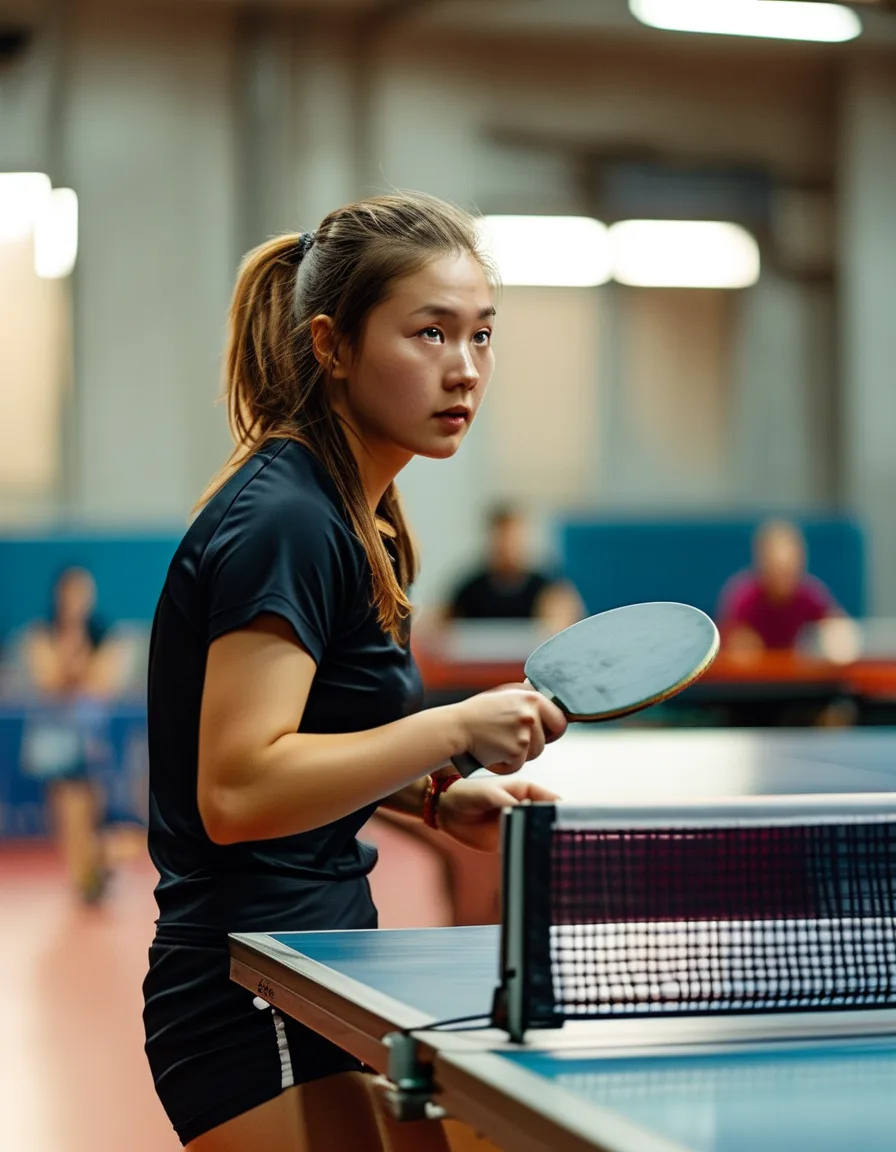
What Does Table Tennis Actually Train?
An extremely fast, highly specific visual-motor response to a small ball at close range with heavy spin.
Break that down and you can see how particular it is:
- A 40mm ball — a small visual target requiring precise tracking
- At roughly 2.7 meters across the table, giving you a fraction of a second
- With substantial spin, which changes the ball’s path after the bounce
- Requiring a fine-motor bat adjustment, not a gross-motor whole-body movement
That’s a genuinely elite skill. Top players operate at speeds that seem impossible to spectators, and much of what looks like superhuman reflex is actually something more interesting: anticipation.
Experienced players aren’t reacting to the ball so much as reading the opponent’s bat angle, body position and contact point, and predicting where it’s going before it arrives. That’s pattern recognition built from thousands of repetitions — and it’s the part that’s most tightly bound to the specific context in which it was learned.
Why Doesn’t That Speed Transfer More Broadly?
Because trained reaction is largely context-specific, and this is one of the more consistent findings in motor learning research.
Simple reaction time — how fast you respond to a basic stimulus like a light — is relatively fixed and doesn’t improve much with training. What does improve dramatically is choice reaction and anticipation within a familiar context: recognizing meaningful patterns, predicting outcomes, and having a pre-prepared motor response ready to go.
The catch is that those improvements are built on domain-specific knowledge. A table tennis player’s speed at the table depends on years of reading bat angles and spin — information that simply doesn’t exist when a car brakes ahead of you or a soccer ball comes in from a cross.
So the fast hands stay at the table. The general “improves your reflexes” claim over-promises, because it describes a general-purpose upgrade that reaction training doesn’t really deliver.
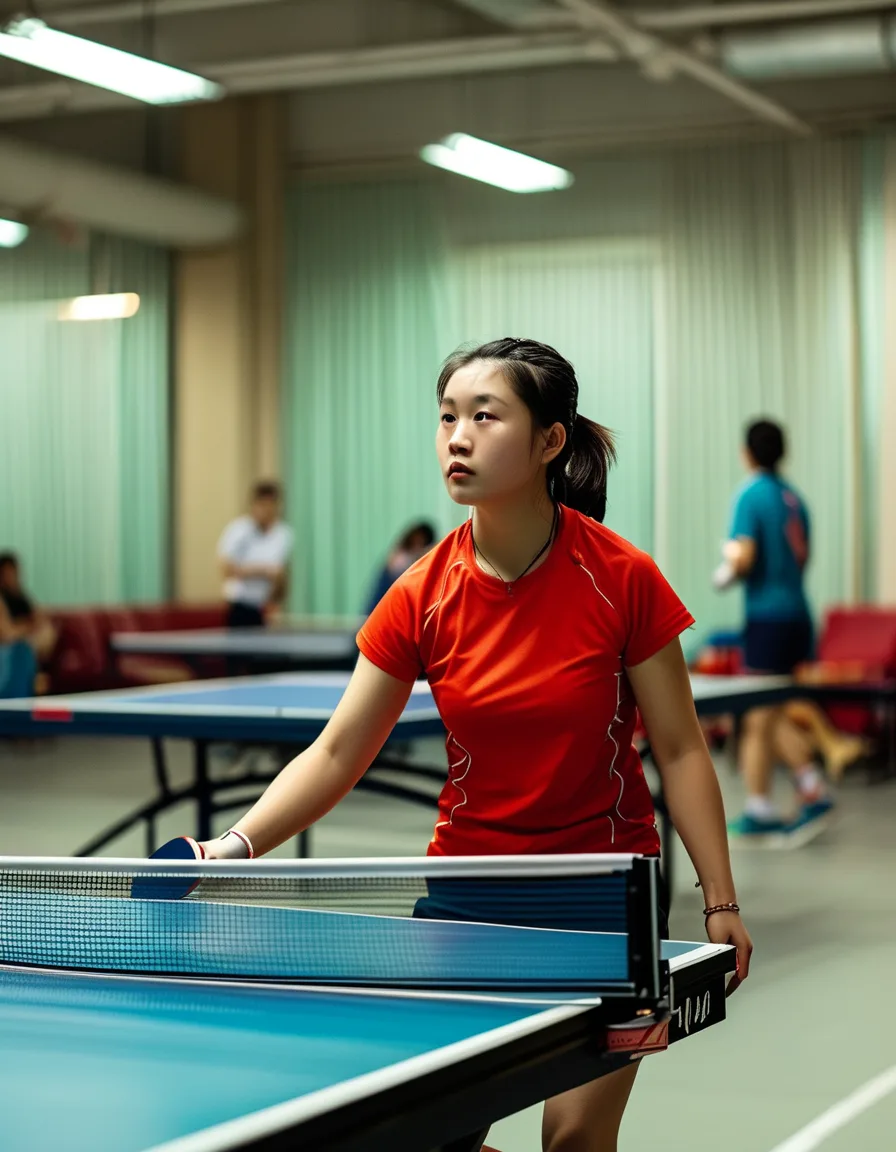
Where Does Some Transfer Genuinely Happen?
Not nowhere. The specificity principle cuts both ways: the more a second activity resembles the first, the more transfer you get.
Meaningful overlap:
- Tennis and badminton — reading a fast, spinning object, racket-based fine motor control, similar visual tracking demands. Table tennis players often pick these up notably quickly.
- Squash and pickleball — same family, similar reads.
- Other close-range racket and paddle sports generally.
Modest or partial overlap:
- Baseball and cricket batting — different scale and timing, but shares the “predict a spinning ball’s path from early cues” skill.
- Hand-eye coordination tasks in general, to a limited degree.
Little to no overlap:
- Driving reaction time
- Team sports with whole-body movement and wide visual fields
- Everyday startle responses, which is why the falling glass still wins
There’s a genuinely interesting sub-benefit worth noting: the anticipation skill — extracting information from early movement cues — appears to be a somewhat more portable habit than raw speed, particularly for other sports where reading an opponent matters. It’s not a general-purpose upgrade, but it’s more than nothing.
What Nobody Tells You About Playing for the Cross-Training Benefit
The sport-specific benefit is already excellent. Elite reaction speed and fine hand-eye control within table tennis is a real, valuable skill. It doesn’t need to generalize to justify the time.
The cognitive load is genuinely high. Table tennis demands rapid decisions, pattern recognition and constant adjustment. Research on racket sports and cognitive engagement is generally positive, and it’s a considerably more mentally involving activity than most low-impact exercise.
It’s remarkably low-impact for what you get. Minimal joint loading, playable well into later life, and requiring far less space and equipment than most sports. That accessibility is arguably a bigger practical benefit than any reflex claim.
Footwork is the actual limiter, not hands. Most recreational players plateau because of positioning, not reaction speed. The transfer people do get from table tennis to other sports often comes from the lateral movement and balance work, which is quietly athletic.
Playing longer points beats playing faster ones for improvement. Rally-based practice builds the pattern library that anticipation runs on. Smashing everything feels good and teaches you less.
Practical note: because it’s all short lateral steps and quick direction changes, what you wear matters more than the sport’s reputation suggests. Non-restrictive, close-fitting kit that doesn’t catch when you rotate — a fitted top and high waist leggings or shorts — beats loose gym clothes that snag on the table edge mid-point.
FAQ
Does playing table tennis actually improve reaction time?
Yes, substantially — within table tennis. What improves is anticipation and choice reaction within a familiar context, which is genuinely trainable. What doesn’t improve much is general-purpose simple reaction time, which is why the gains stay largely at the table.
Is table tennis good cross-training for tennis?
It’s one of the better crossovers, because the visual-tracking and spin-reading demands overlap meaningfully. It won’t substitute for court movement, groundstroke mechanics or the endurance side of tennis — treat it as a complement to those rather than a replacement.
Will table tennis make me a faster driver or better in emergencies?
No, and that’s the version of the claim worth being skeptical about. Driving reaction depends on a different visual field, different cues and different motor responses entirely. Play table tennis because it’s excellent on its own terms.
TL;DR
- Table tennis builds genuinely elite reaction speed — for a small, spinning ball at close range.
- Most of that speed is anticipation, built on thousands of reps reading bat angle and spin.
- Trained reaction is largely context-specific, so it doesn’t transfer to driving or unrelated sports.
- Real overlap exists with tennis, badminton, squash and pickleball — shared visual-tracking demands.
- The sport-specific benefit is reason enough: low-impact, cognitively demanding, playable for life.
- Footwork, not hands, is what limits most recreational players.
Keep Reading
This article is for general informational and styling purposes only. Fit, sizing, and product availability may vary.