Table Tennis Reaction Time Isn't Fixed — Here's How It Actually Trains
Quick Answer: Table tennis reaction time improves through anticipation training (reading opponent shoulder and paddle angle before ball contact) more than raw reflex drills — most of the ‘reaction speed’ elite players show is actually earlier prediction, not faster nerves.
You watch top players return shots that seem impossible to react to in time. The secret isn’t superhuman reflexes — it’s that they’re barely reacting to the ball at all. They’re reacting to information that arrives before the ball does.

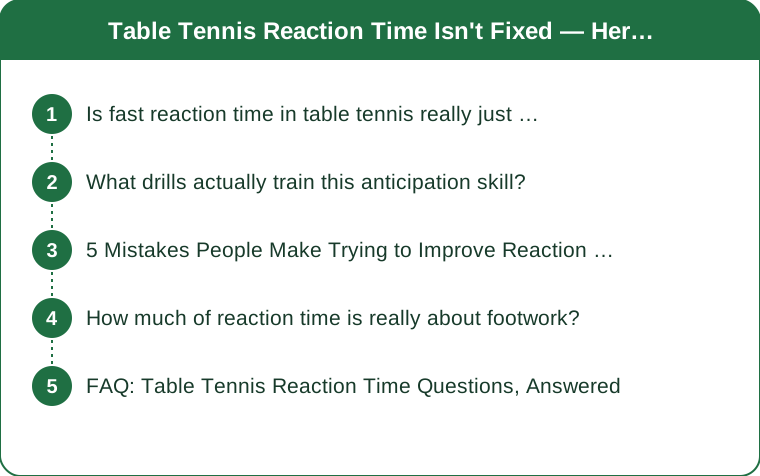
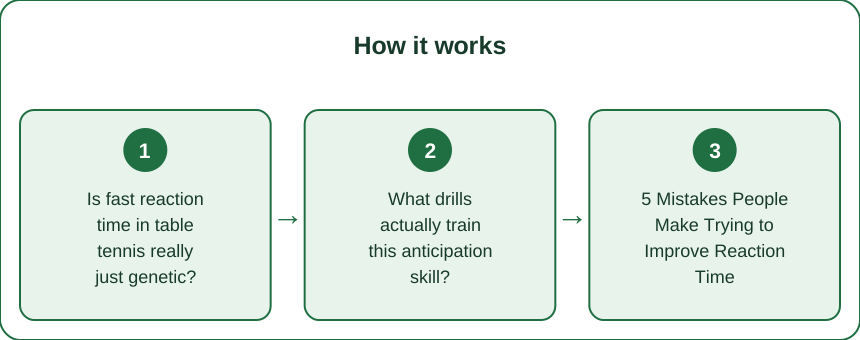
Is fast reaction time in table tennis really just genetic?
Raw nerve conduction speed has a genetic component, but the actual skill separating elite from recreational players is anticipation — reading the opponent’s paddle angle, shoulder rotation, and contact point milliseconds before the ball leaves their paddle.
Studies on expert vs. novice athletes across racket sports consistently show experts responding to pre-contact cues, not to the ball’s flight itself, which is too fast to react to purely reflexively at high levels.
What drills actually train this anticipation skill?
Occlusion training: have a partner or coach cover the ball at the moment of contact (or just after) and guess the shot’s direction and spin from the swing alone. This directly trains the cue-reading skill that raw ball-watching doesn’t.
Another effective drill: shadow tracking — stand across from a partner practicing strokes with no ball, calling out where you’d expect the shot to go based on their paddle angle alone.

5 Mistakes People Make Trying to Improve Reaction Time
1. Only doing reflex-ball drills (random ball machine feeds). These train raw reaction, which is a smaller factor than anticipation for actual match play.
2. Watching the ball exclusively. Elite players split visual attention toward the opponent’s paddle and shoulder, not just the ball.
3. Ignoring footwork readiness. Being in a stable ready position cuts your effective reaction distance more than faster reflexes would.
4. Never reviewing match footage. Watching your own matches back reveals which cues you’re missing before contact.
5. Training reaction time only, never recovery position. Fast reaction without a fast return to ready stance just delays the same problem to the next shot.
How much of reaction time is really about footwork?
A significant portion of ‘slow reactions’ is actually delayed initial footwork, not delayed visual processing. Being on your toes with weight slightly forward, versus flat-footed, can effectively add tenths of a second to your available reaction window without any change in visual processing speed at all.
FAQ: Table Tennis Reaction Time Questions, Answered
Can adults improve reaction time as much as younger players?
Anticipation skill (reading cues) improves with practice at any age; raw nerve conduction speed has more age-related limits, but since anticipation is the bigger factor, adults can still improve significantly.
Do reaction-time video games or apps help table tennis specifically?
General reaction apps have limited transfer — sport-specific occlusion drills using actual paddle/ball cues transfer much better to real match performance.
How long until anticipation training shows results?
Most players notice measurable improvement in return consistency within 4-6 weeks of regular occlusion and shadow-tracking drills.
TL;DR:
- Elite ‘fast reactions’ are mostly early anticipation, not faster reflexes
- Occlusion drills (guessing shots from swing alone) train the real skill
- Ready-stance footwork adds effective reaction time without changing reflexes
- Anticipation training shows results in about 4-6 weeks of regular practice
Train your eyes on the opponent’s paddle, not just the ball.
Keep Reading
This article is for general informational and styling purposes only. Fit, sizing, and product availability may vary.