Table Tennis Footwork: Why Small Steps Beat Fast Hands Every Time
Quick Answer: Most ‘bad shots’ in table tennis are good swings launched from the wrong spot — the hand gets blamed for the feet’s crime. The fix is small-step footwork: a light ready-bounce, tiny side-shuffles that keep the ball in your ideal strike zone, and the rule that you move before you swing, never during. Ten minutes of shadow drills per session rebuilds it.
Watch a beginner miss and they stare at their paddle like it betrayed them. Watch their feet during the same rally: flat, planted, reaching. The paddle did exactly what a paddle does from three inches too far away — the miss was decided before the swing began.
Why is footwork the real stroke?
Because every stroke is calibrated for a strike zone — the pocket of space, roughly a forearm’s length from your body at waist height, where your practiced swing produces its practiced result. Contact the ball there and your stroke works; contact it outside — cramped against your hip, stretched at full reach — and the same swing produces a different, worse shot.
Hands are fast enough to reach almost anything at beginner pace, which is exactly the trap: reaching feels like coverage, but a reached ball is hit outside the zone with degraded control every single time. The scoreboard difference between beginners and improvers isn’t swing quality — it’s what percentage of balls get struck inside the zone, and that percentage is written entirely by the feet.
The mental flip that changes practice forever: stop asking ‘why did my hand miss?’ and start asking ‘why was my body not there?‘
What does small-step footwork actually look like?
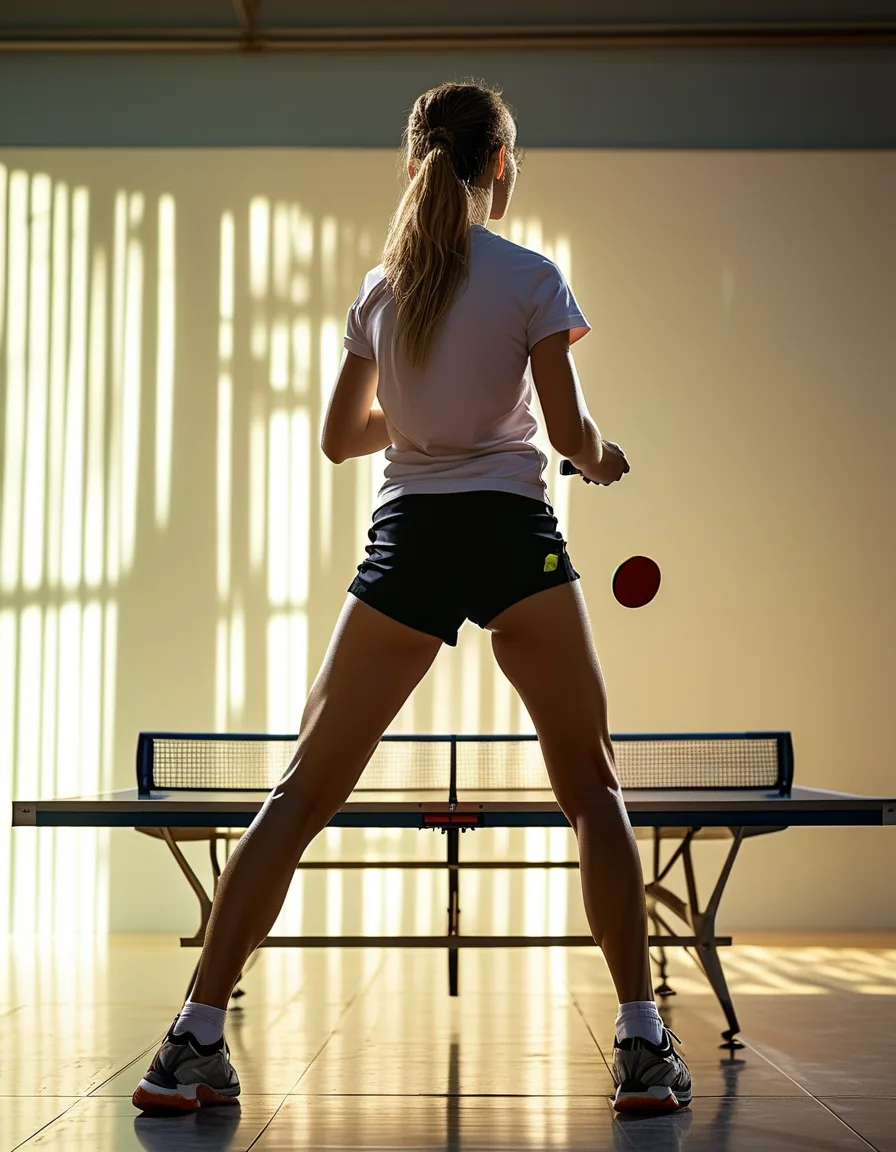
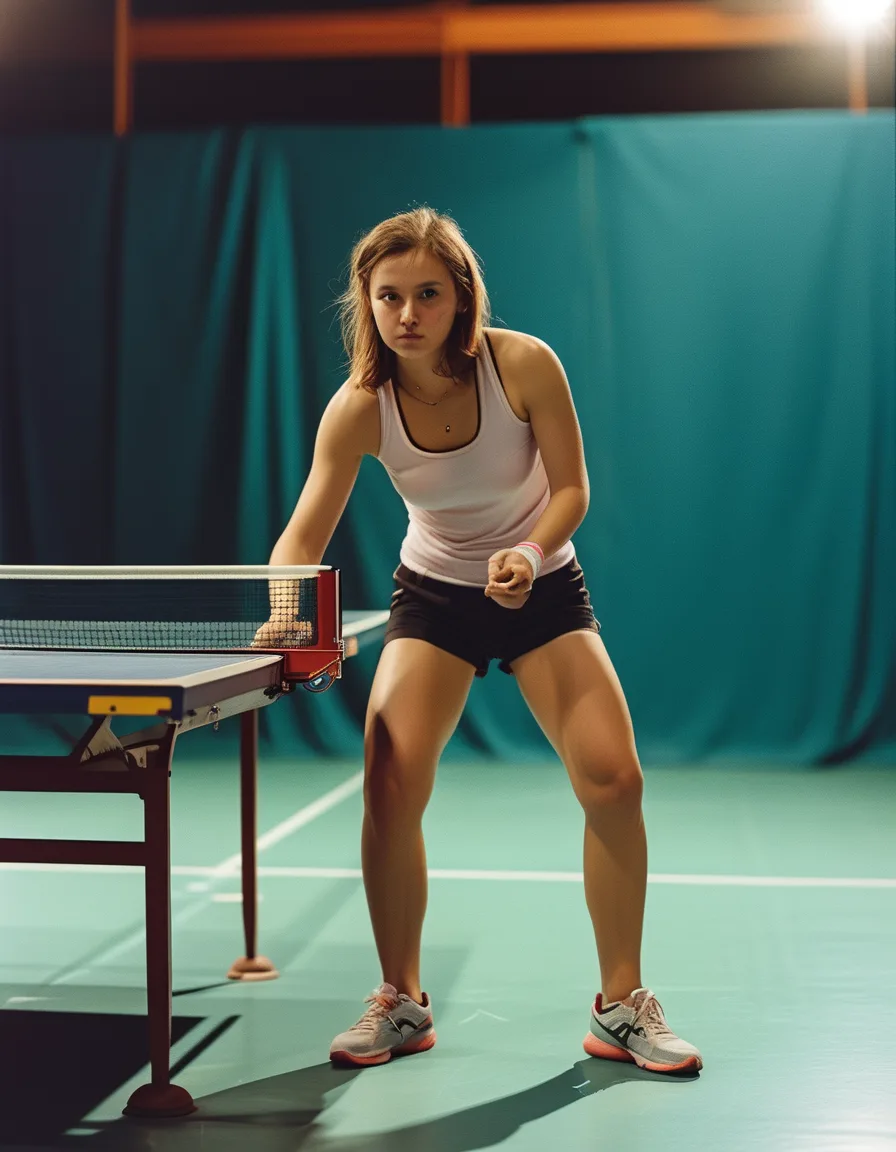
The base — ready position: feet a bit wider than shoulders, knees soft, weight on the balls of the feet, slight forward lean. Between every shot, a tiny bounce or weight-shift — a body in micro-motion adjusts instantly; a planted body must first unfreeze.
The core pattern — the side shuffle: for most table-width coverage, small quick side-steps (push off the far foot, both feet glide, never crossing) of 10-30cm. Two small shuffles beat one lunge every time, because you arrive balanced — able to swing your normal stroke instead of a stretched improvisation.
The sequencing rule that fixes 80% of it: move, arrive, then swing — as three events, not one blur. Beginners swing while moving, which smears the stroke; improvers are briefly stationary at contact even in fast rallies. Watch any skilled player in slow motion: feet finish, then hands fire.
The 10-minute drill block (no table partner needed): shadow footwork — ready-bounce, shuffle two steps left, shadow a forehand, shuffle back, repeat right (3 minutes); the same against a wall with a ball (3 minutes); then side-to-side within rallies, consciously counting steps-before-strokes (4 minutes). Boring, rhythmic, and worth more than an hour of just rallying.
What Nobody Tells You About Standing Still
The deepest habit sabotaging beginners isn’t slow feet — it’s admiring the shot. You hit, and for half a second you stand watching your ball’s journey like a proud parent. That half-second is exactly when the opponent’s reply gets aimed, and your recovery starts late by precisely the amount of time you spent spectating.
The elite habit is the opposite: hit and reset — the recovery shuffle back to ready position starts before your ball even lands. The rally is a loop, not a sequence of shots, and the reset is part of the stroke.
Install it with one cue: after every shot, say (silently) ‘back’ — and let the word trigger the bounce back to ready. It feels robotic for a week, then becomes the reason opponents suddenly can’t find open table against you. The half-second you stop donating is the half-second that was beating you.
Bonus honesty: this is also the cardio nobody warns you about — real footwork turns casual ping-pong into a legitimate workout, which is either a feature or a betrayal depending on why you came.
FAQ: Table Tennis Footwork Questions, Answered
Do I really need footwork at a casual level?
The payoff is biggest at casual level — beginner rallies are slow enough that two small shuffles reach everything, so decent feet make you feel telepathically fast against peers. Advanced players all have footwork; among beginners, it’s a superpower.
What shoes matter for this?
Anything grippy, flat, and light — court or indoor shoes over running shoes (whose cushioned heels wobble on lateral moves). The floor matters too: dusty floors sabotage even good shoes; a damp-wiped sole mid-session is the old gym trick.
How do I practice alone at home?
Shadow drills (above), plus the wall-rally with footwork rules — must shuffle at least one step between wall hits. Even the ready-bounce habit alone, practiced while waiting for the kettle, transfers: the body that defaults to micro-motion is the one that arrives on time.
TL;DR:
- Misses are mostly good swings from wrong positions — the strike zone, not the paddle, decides shot quality
- Small quick shuffles (never lunges), constant ready-bounce, and the rule: move, arrive, THEN swing
- Kill the shot-admiring habit — recovery starts before your ball lands (‘hit and reset’)
- 10 minutes of shadow footwork per session outbuilds an hour of rallying
Your hands were framed — the feet did it, and now you know where to send the practice time. This is general information, not medical advice.
Keep Reading
This article is for general informational and styling purposes only. Fit, sizing, and product availability may vary.