Why Your Table Tennis Backhand Feels Permanently Weaker Than Your Forehand
Quick Answer: The backhand feels weaker mainly because it uses a shorter, more restricted swing path with less hip and shoulder rotation available than the forehand — the fix isn’t more raw power, it’s using wrist snap and forearm rotation more deliberately since the big-muscle rotation the forehand relies on isn’t available in the same way.
Most players assume the backhand gap is just about reps. It’s partly that, but there’s a real biomechanical reason it never quite catches up on its own.
Why is the backhand swing structurally more limited?
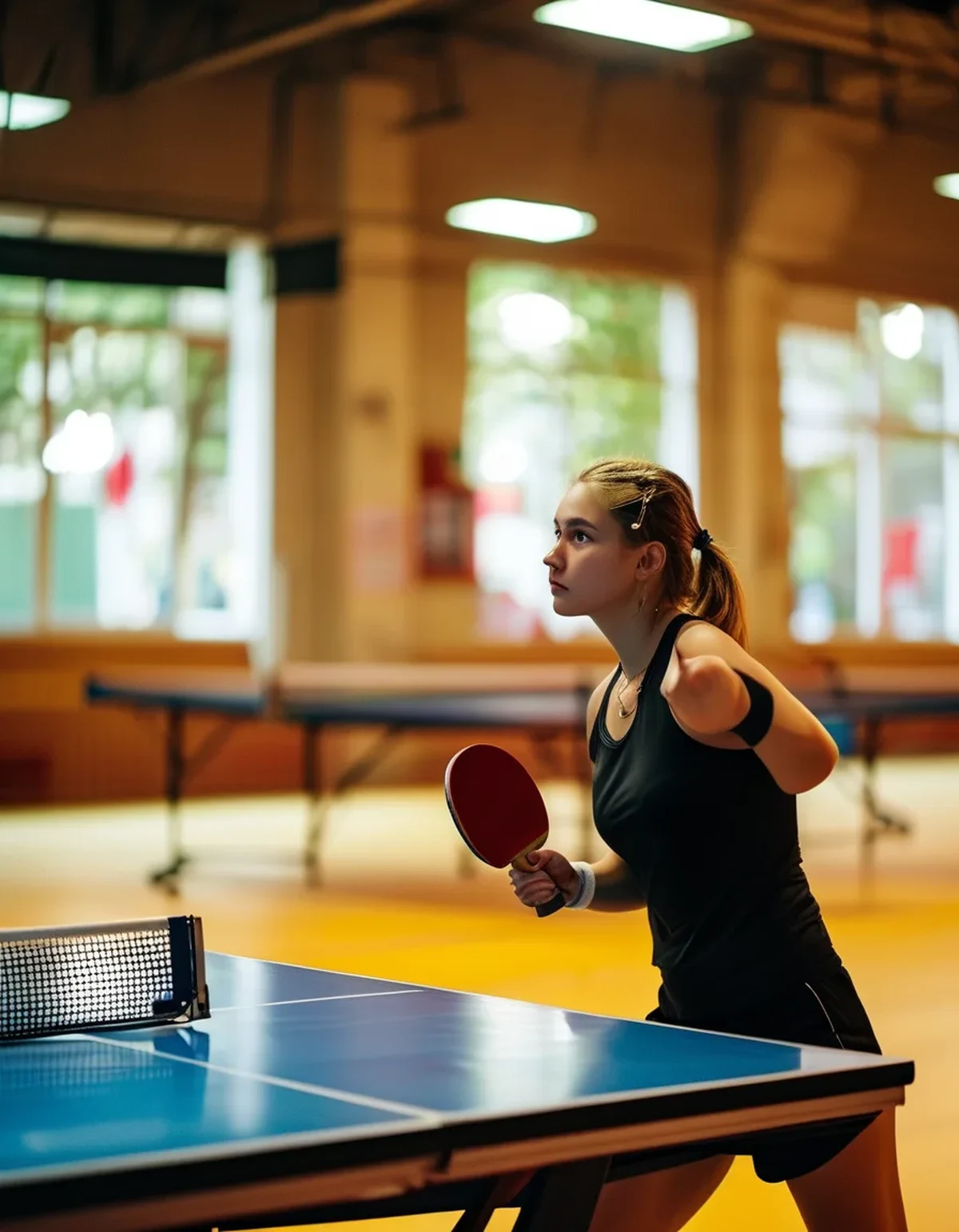
The forehand allows a full hip and torso rotation into the shot, generating power from large muscle groups. The backhand, especially close to the body, has a much shorter available range before the swing runs into your own torso — power has to come from smaller, faster movements instead.
Where should backhand power actually come from?
Forearm rotation and a quick wrist snap at contact, rather than trying to recreate a big shoulder turn. Players who try to force forehand-style rotation into a backhand often end up off-balance and late, which reads as ‘weakness’ but is really a timing problem.
Does grip affect backhand strength specifically?
Yes — a grip that’s slightly too tight or angled wrong for backhand contact restricts the small wrist movements that generate backhand pace. Loosening grip pressure specifically on backhand-heavy drills, and allowing a bit more wrist flexibility, often produces an immediate power increase.

Is footwork part of the backhand power problem?
Often, yes — many players don’t shift weight forward on backhand shots the way they instinctively do on forehands, leaving the shot arm-only. A small forward weight transfer, even without a big step, adds noticeably more pace without changing the swing itself.
How much of the gap is genuinely just practice volume?
A meaningful amount — most players naturally hit 2 to 3 times more forehand reps than backhand reps in casual play, since forehand is the default ‘comfortable’ shot. Deliberately drilling backhand-only rallies for a few sessions closes more of the gap than most players expect.
What Nobody Tells You About Backhand Power
Elite players don’t actually have equally powerful forehands and backhands in the raw-power sense — they compensate with better shot placement and earlier contact timing on the backhand side rather than trying to match forehand force output stroke for stroke. Chasing equal power is often the wrong goal entirely.
FAQ: Table Tennis Backhand Questions, Answered
Should beginners avoid backhand shots and just run around to forehand?
Early on, running around to forehand is a common shortcut, but it builds a habit that limits reach later — mixing in backhand practice from the start pays off longer term.
Does racket/blade stiffness change backhand power potential?
Yes, somewhat — a more flexible blade can help beginners generate backhand pace with less technical refinement, though technique still matters more long-term.
How long does it typically take to close a noticeable backhand gap?
With focused backhand-only drilling, most players notice a real difference within 3 to 4 weeks of consistent practice.
TL;DR:
- The backhand’s shorter swing path means power has to come from wrist and forearm, not big rotation
- A too-tight or misaligned grip quietly limits backhand pace
- Forward weight shift adds power without changing the stroke itself
- Most players simply hit fewer backhand reps overall, widening the gap over time
Next session, spend 10 minutes on backhand-only rallies before mixing shots back in — isolating it, even briefly, tends to reveal the fix faster than mixed practice does.
Keep Reading
This article is for general informational and styling purposes only. Fit, sizing, and product availability may vary.